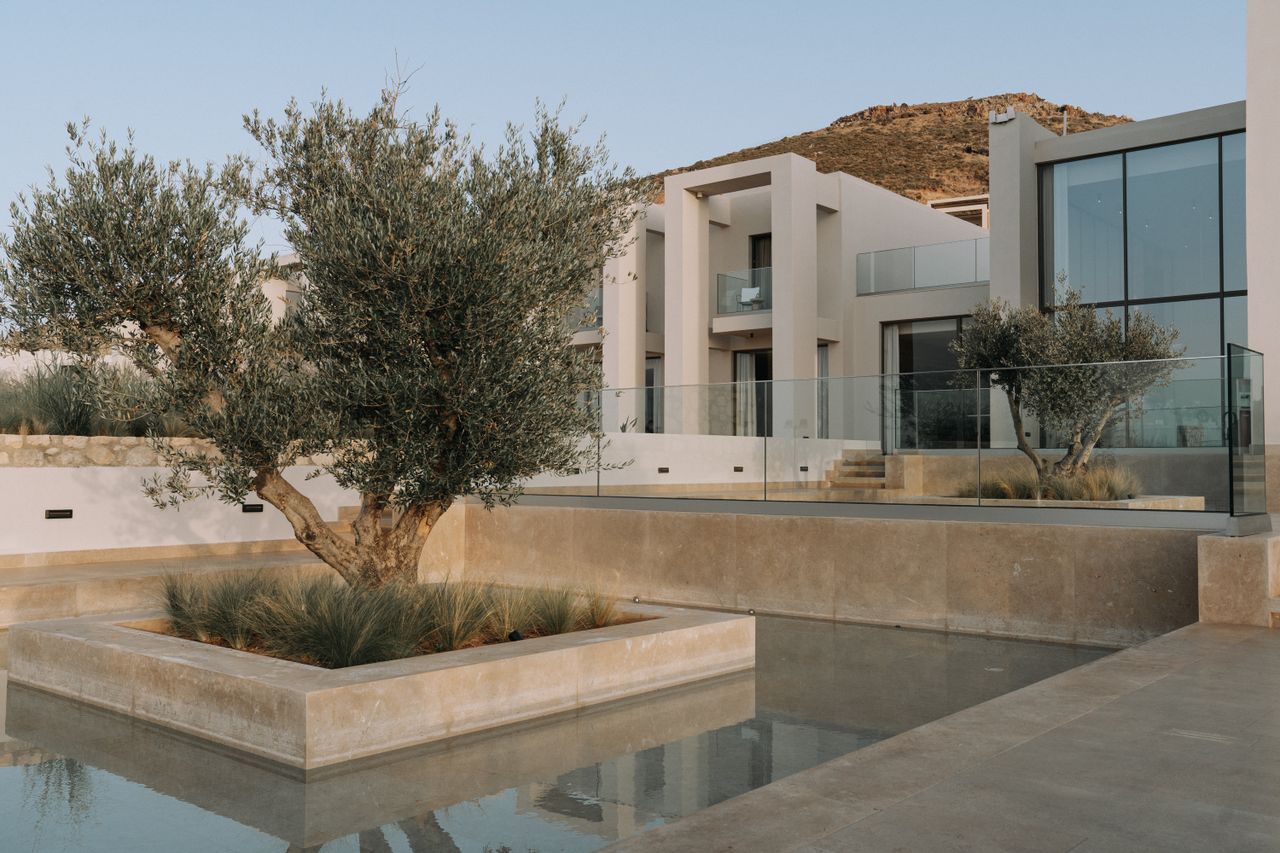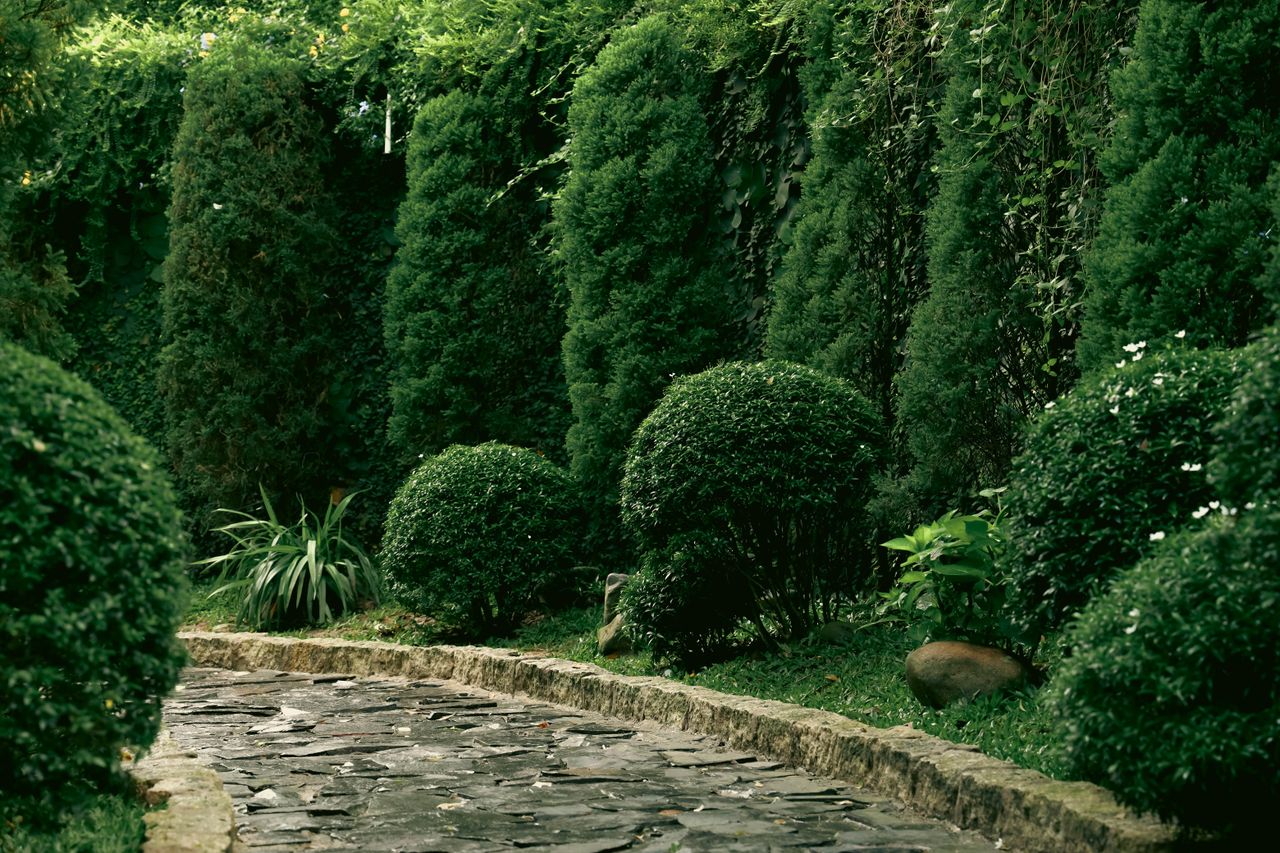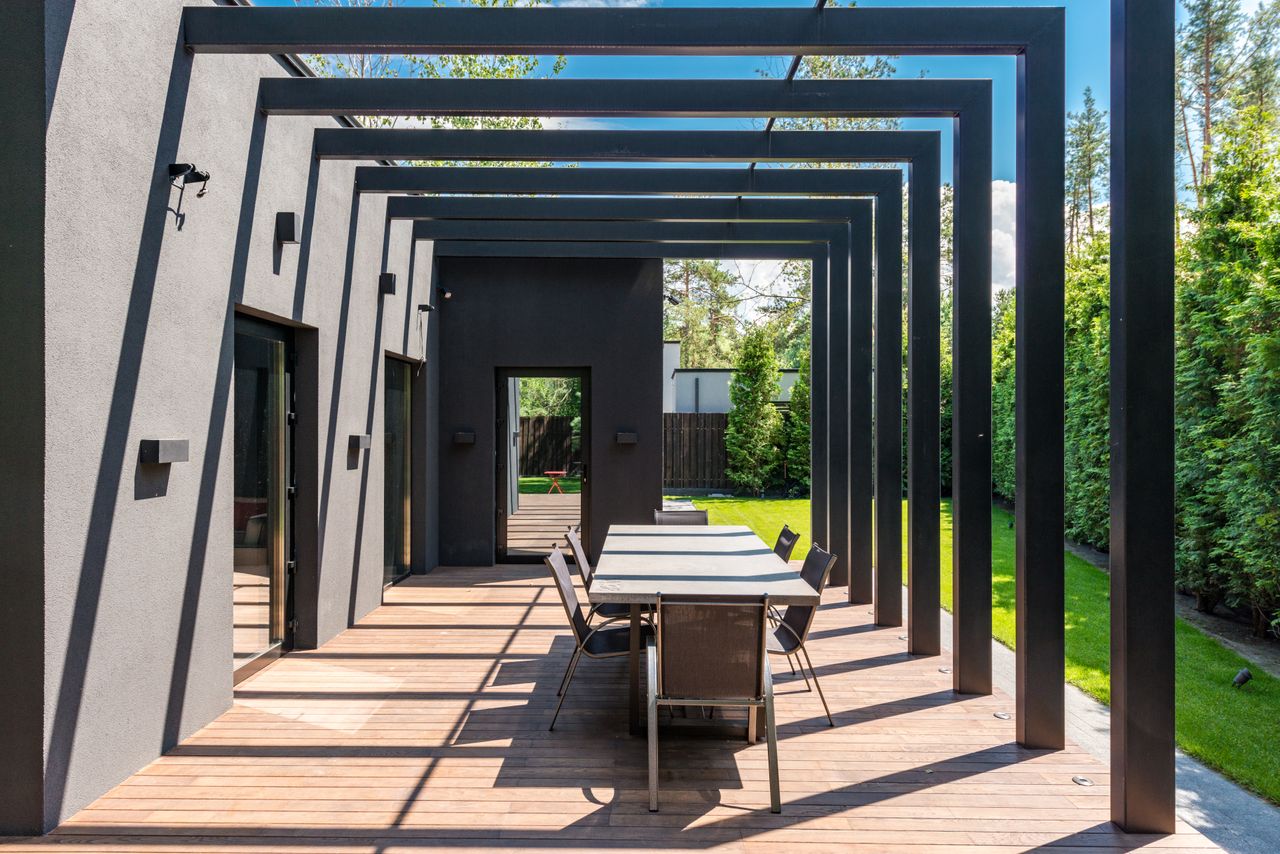
Some spaces feel composed before we consciously understand why.
Often, one of the reasons is repetition. A repeated architectural line, planting rhythm, structural beam, or material can create a sense of order that allows the eye to move through a space naturally. Nothing needs to demand attention because the design already has a clear visual language.
Repetition Creates Rhythm
When an element appears more than once, our eye begins to recognize a pattern.
In architecture, this might be a sequence of pergola beams, columns, windows, or ceiling details. In a landscape, it might be repeated trees, clipped forms, grasses, or paving lines. The effect is similar: repetition creates rhythm. Rather than experiencing every element separately, we begin to read the space as a connected whole.
Consistency Makes a Space Feel Intentional
Repetition can also make different parts of a design feel related.
A material introduced at the entrance might appear again in an outdoor area. A linear architectural detail might be echoed in the landscape. Planting forms might repeat the geometry of the building. These relationships do not need to be obvious.
In fact, the most successful repetition often works quietly in the background, creating coherence without making the space feel overly coordinated.
Repetition Needs Restraint
Too much repetition can become rigid or monotonous. The goal is not to duplicate everything.
Variation within a repeated structure often creates the most interesting result—similar forms at different heights, repeated materials used in different proportions, or a consistent rhythm interrupted at a deliberate moment. That small amount of variation keeps the composition alive.
The Casa Quiete Perspective
Repetition is one of the simplest ways to make a space feel resolved.
It gives the eye something to recognize, creates relationships between different elements, and establishes a visual rhythm. When used with restraint, repetition does not make a design predictable. It makes it feel intentional.
Continue exploring: Discover more design intelligence in the Casa Quiete Design Journal.